
San Joaquin County Criminal Records Overview
Three offices produce most of the criminal record content in the county. The San Joaquin County Sheriff's Office, led by Sheriff Patrick Withrow, books arrestees, runs the county jail, and keeps the arrest log that feeds the Who's in Custody tool. City police agencies in Stockton, Lodi, Manteca, Tracy, Ripon, and Escalon also make arrests and transport people to the county jail. The District Attorney, Ron Freitas, reviews the police reports and decides whether to file charges. Once a complaint is filed, the case moves to the Superior Court of California, County of San Joaquin, and a court case file is opened.
An arrest record is not the same as a conviction record. A person can be arrested and then released with no charge. A person can be charged and then have the case dismissed. A person can plead guilty, get probation, and later have the conviction dismissed under Penal Code section 1203.4. Each step generates a different record. The court case file, kept by the Clerk of the Superior Court, is the most complete source for charges, motions, plea forms, sentencing minutes, and disposition.
The court publishes case data through two public tools. The party-name search at the court website does not show date of birth or driver's license number for any criminal case. That limit comes from California Rule of Court 2.507. The case-number portal at FullCourt Enterprise shows more docket detail for cases filed on or after October 19, 2015. Older criminal cases may need an onsite review at the court records office.
How to Search San Joaquin County Criminal Records
The party-name search is the right starting point when no case number is known. It runs free of charge, 24 hours a day. The form requires at least two of the name fields and a filed-year range. Common names produce long result lists, so a middle name or a tighter year range helps. The result table shows only three columns: NAME, CASE NUMBER, and CASE NAME. A case number is needed for any deeper lookup.
- Open the case management search page and click "Search for a case by party name."
- Read the on-page disclaimer. The court warns that the portal is not the official record.
- Enter at least two of these fields: Last name, First name, Middle name, or Company.
- Pick "Criminal" as the case type, then set the filed-year range using four-digit years.
- Solve the math check, pass the reCAPTCHA, and click Search.
- If a likely match returns, copy the case number and run a case-number search at FullCourt Enterprise.
For a statewide criminal history check, the California Department of Justice runs a fingerprint-based system through Live Scan. That report is a Record Review and is released only to the subject. A casual public search of one county's court records will not return that statewide rap sheet. Federal charges are separate again, and those run through PACER for the U.S. District Court for the Eastern District of California.
Arrest Records vs Criminal Court Records
A booking happens before any charge is filed. Police bring a person to the jail. The Sheriff takes a photo, prints, and inventory. The Who's in Custody tool then displays the arrest. If the DA decides not to file, or the case is dropped at arraignment, the court file may be very short or never opened. The arrest still exists in the Sheriff's records and in any state rap sheet pull.
| Arrest Record | Criminal Court Record | |
|---|---|---|
| Source | San Joaquin County Sheriff or city police | Superior Court, Clerk's office |
| Created When | Booking at the jail | DA files a complaint or information |
| Main Contents | Booking info, charges as alleged, mugshot, bail | Pleadings, minute orders, plea, sentence, disposition |
| Public Search Tool | Who's in Custody | FullCourt Enterprise |
| Record Stays If No Charge? | Yes, unless sealed under PC 851.91 | Often no court file is opened |
Use the Sheriff site to learn that a person was booked. Use the court site to learn what the DA did next.
Charges vs Convictions in San Joaquin County Criminal Cases
The difference matters for jobs, housing, immigration, and licensing. A charge is an accusation. A conviction is a judgment. A search of San Joaquin County criminal records can show both at the same time on the same case, because docket entries log every step. A reader who stops at the filing date may miss a later dismissal. Always read down to the disposition entry.
| Charge | Conviction | |
|---|---|---|
| Stage | Filed by the DA | Verdict, plea of guilty, or plea of no contest |
| Burden of Proof | Probable cause | Beyond a reasonable doubt |
| Public Record | Yes, unless sealed | Yes, unless dismissed under PC 1203.4 |
| Effect on Sentencing | None | May impose jail, fines, probation, restitution |
| Where to Read It | Complaint or information in the case file | Sentencing minute order and judgment |
Note: A reduction from felony to misdemeanor under Penal Code section 17(b) shows as a separate minute order and changes how the case is reported on background checks.
What a San Joaquin County Criminal Record Shows
The court case file is the deepest source. Once a case number is known, the FullCourt Enterprise portal opens the docket and the calendar. The fields below match the standard San Joaquin Superior Court layout for a criminal case.
- Arrest
- The act of taking a person into custody. Logged by the arresting agency.
- Charge
- The specific Penal Code or Vehicle Code section the DA filed.
- Conviction
- A guilty verdict, a guilty plea, or a no-contest plea entered as guilty.
- Plea
- The defendant's formal answer to a charge: guilty, not guilty, or no contest.
- Sentence
- The punishment ordered after a conviction, such as jail, fines, or probation.
- Probation
- A community-based sentence with conditions, supervised by the Probation Department.
- Parole
- State post-prison supervision, run by the California Department of Corrections.
- Expungement
- The common name for PC 1203.4 dismissal relief after probation.
A standard docket entry will also list the courtroom, the assigned judge, the next hearing date, and any bench warrant activity. Filings, motions, minute orders, and exhibits each get their own line.
Rule 2.507 and the Limits of Remote Criminal Searches
California Rule of Court 2.507 controls what a court may show in a remote electronic criminal case search. The San Joaquin court page warns about this rule on the case-search landing page. The rule blocks date of birth, driver's license number, and certain other personal identifiers from a remote party search of criminal cases. The rule does not block in-person courthouse review of those same files. A user who needs the full DOB-attached record must go to the records office at 180 East Weber Avenue or file a records request.
One result of Rule 2.507: a name search may return several different people with the same name and no way to pick the right one from the online list. The case-name column, the case-filed year, and the case-number prefix help narrow it down. For real precision, the in-person record viewer at the courthouse is still the gold standard.
The court treats Rule 2.507 as a privacy floor, not a ceiling. The rule lets the court add stronger limits when the presiding judge thinks it is needed. Read the rule on the California Courts site for the full text.
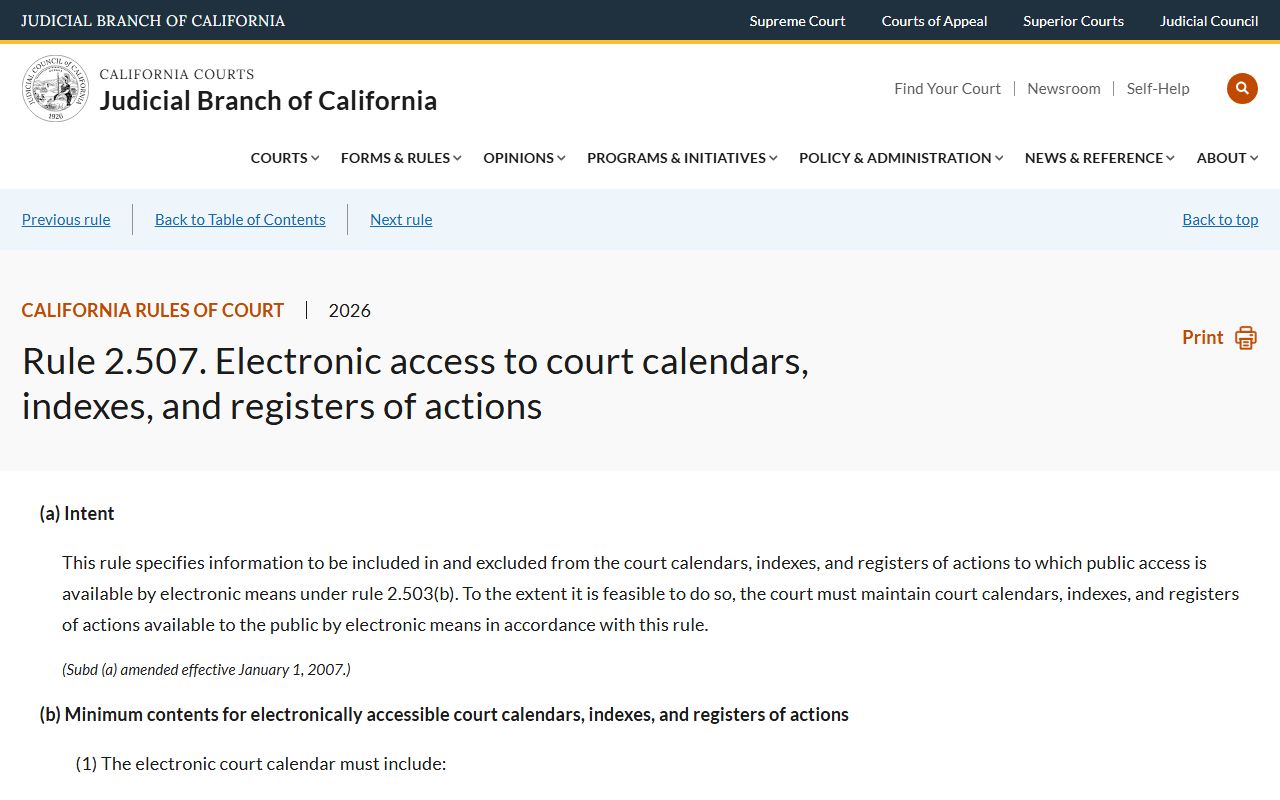
The rule is the reason most paid background-check vendors still send a runner to the courthouse for serious checks. Online remote data is shallow on purpose.
Sealed vs Expunged San Joaquin County Criminal Records
California uses two different relief tracks. Sealing under Penal Code section 851.91 covers arrests that did not lead to conviction. Dismissal under Penal Code section 1203.4 covers convictions after probation is done. The words are not interchangeable. A sealed arrest is hidden from public search. A 1203.4 dismissed case still shows on the docket, but the plea is set aside and the case is "dismissed in the interest of justice."
| Sealed (PC 851.91) | Expunged / Dismissed (PC 1203.4) | |
|---|---|---|
| What It Covers | Arrests with no conviction | Convictions after probation success |
| Effect on Public Record | Hidden from public view | Plea set aside; case marked dismissed |
| Law Enforcement Access | Limited under the statute | Still accessible for many criminal-justice uses |
| Common Bar to Relief | Statutory exclusions for serious offenses | Sex offense and serious felony bars |
| Effect on Firearm Rights | Often none | Often none under federal law |
| Where to File | Court that handled the arrest | Court that handled the conviction |
Penal Code section 851.8 is a stronger remedy. It applies when a person can prove factual innocence after an arrest. It is rare, hard to win, and can lead to destruction of the arrest record. Read PC 851.91 and PC 1203.4 for the statutory text.
Mugshots and Booking Photos in San Joaquin County
The Sheriff takes a booking photo at intake. Whether the photo is shown on the public Who's in Custody page depends on current sheriff policy. A booking photo is generally a public record under California law, but a 2014 amendment to Penal Code section 13300 limits how a private mugshot-publication site can demand payment to take a photo down. Older arrest photos may not appear online even when they are technically public.
The DA office at 222 East Weber Avenue does not publish mugshots. The court does not publish mugshots in the case file portal. Anyone who needs a booking photo for a court matter has to request it from the Sheriff under the California Public Records Act. Routine media requests go through the Sheriff's public information channel.
The Role of the District Attorney
The DA decides which arrests turn into court cases. Police forward the arrest report. A reviewing deputy DA reads the file, checks the evidence, and either files a complaint, sends it back for more work, or declines to file. That decision is not always public until a complaint shows up on the docket. Victim and witness services, restitution work, and Marsy's Law notice come from the DA office as the case moves through the system.
The DA also handles juvenile delinquency filings, post-conviction review, and grand jury matters. A case that does not show up on the court party-name search may still be under DA review. The official DA page lists current divisions and the bureaus that handle special victims, gangs, narcotics, and economic crime.
People who cannot afford a private lawyer should ask the court to appoint the Public Defender. The court runs the financial eligibility check. The Public Defender takes most criminal cases for indigent defendants. Conflicts route to alternate defenders or appointed counsel.
Restricted San Joaquin County Criminal Records
Some criminal records are off-limits to a casual public search. Juvenile delinquency files are controlled by Welfare and Institutions Code section 827. Only the court, the parties, named agencies, and a few listed others can read them without a court order. Juvenile sealing under WIC 781 takes them out of public view entirely. WIC 827 sets the basic rule.
Mental health proceedings, conservatorship reports, drug court evaluations, victim safety details, and sealed search warrant affidavits also stay out of the public portal. The court redacts SSNs, financial account numbers, dates of birth, and minor names from documents as a matter of routine. A page that returns "no record" may still hide a sealed or confidential case.
- Juvenile dependency and delinquency files.
- Sealed arrest records under PC 851.91.
- Dismissed cases under PC 1203.4 (dismissed but not hidden).
- Sealed search warrant materials under PC 1534.
- Adoption records under Family Code 9200.
- Mental health and conservatorship medical material.
Note: A search that hits a sealed file usually returns no result rather than a "sealed" notice, so absence of a match is not a guarantee of a clean record.
Background Check Considerations
A San Joaquin County criminal records search is not a Fair Credit Reporting Act background check. The party-name portal and the FullCourt portal show docket data, but neither is built for employment, housing, or credit screening. Federal law treats those uses as regulated consumer reports. They have to come from a registered consumer reporting agency that follows the FCRA notice and dispute rules.
An employer that wants to use a single court hit must run it through an FCRA-compliant vendor, give the applicant a copy, and follow the adverse-action steps. A landlord has similar duties under California Civil Code rules. A friend or family member doing a casual lookup is not subject to those rules, but the limits of Rule 2.507 still apply to what shows up online.
Important: This site is a privately operated resource and is not a consumer reporting agency under the FCRA. Information here cannot be used for employment, credit, housing, or insurance decisions.